Evaluating AI Responses: How to Get Started with No Experience

Every time a chatbot improves the quality of responses, there are people behind it comparing, correcting and rating each model attempt. This work — evaluating AI responses — is one of the most accessible entry points into this entire market, and one of the best paying per hour among all the fronts that do not require prior technical training.
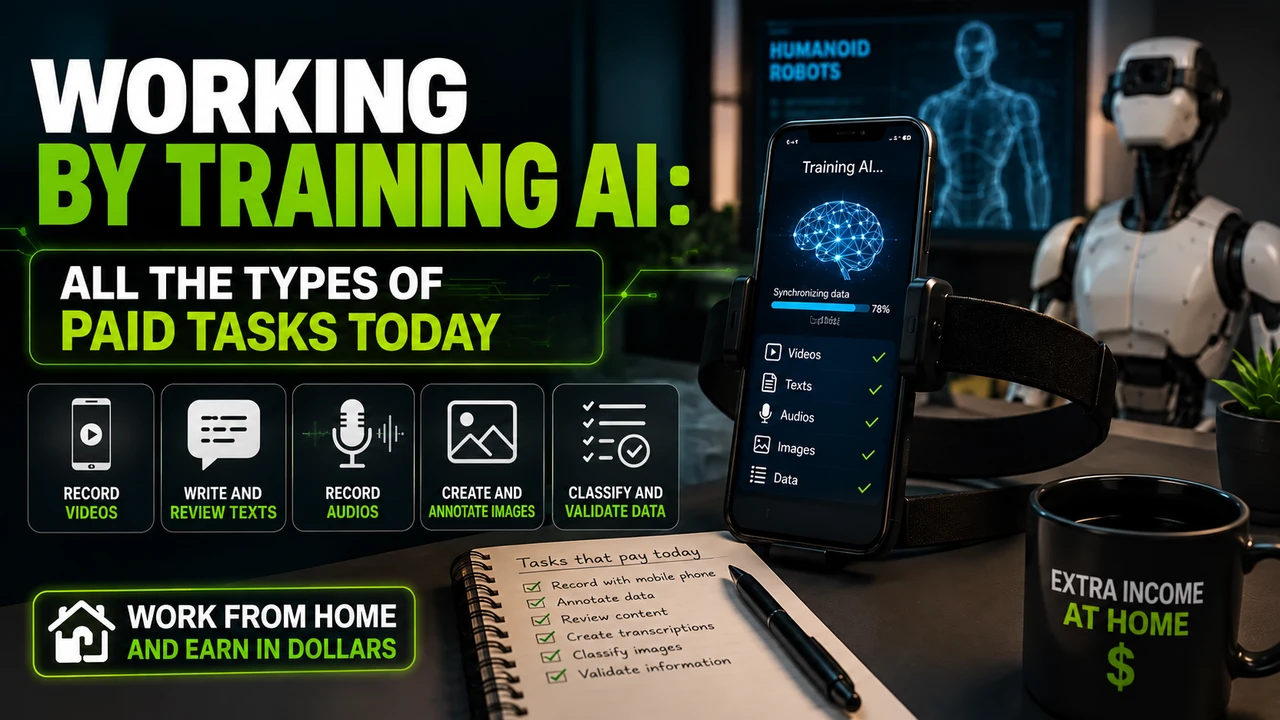
This guide is part of the set of guides for main article on types of paid tasks for training AI and specifically details the evaluation front — probably the most intellectually stimulating of the entire market, as it requires critical reading and careful judgment instead of just following a mechanical and repetitive script.
Straight to the pointWhat is this task
You are given a question and two (sometimes more) answers generated by different versions of an AI model. Your task is to compare the answers, choose which is best according to specific criteria, and justify your choice in writing.
This process is technically known as "RLHF" (reinforcement learning with human feedback) in industry jargon, but you don't need to know this term to get the job done — just follow the criteria guide provided by the project. It's exactly this kind of repeated comparison, made by thousands of people, that teaches models to prefer better answers over time.
A practical example of a task
You get the question “How do I change a tire?” along with two AI-generated responses. One is detailed but contains an incorrect step; the other is shorter but completely correct. Your task is to choose which answer is best and write, in a few clear sentences, the real reason behind your choice.
How to judgeThe criteria you will use
| Criterion | What do you observe |
|---|---|
| Factual accuracy | Does the answer contain correct information or invent data? |
| Clarity | Is it easy to understand, without unnecessary fuss? |
| Appropriate tone | Does the tone match the context of the question? |
| Completeness | Does it answer everything that was asked, without leaving any gaps? |
| Absence of harmful content | Does it not contain dangerous or inappropriate information? |
In addition to these five main criteria, some projects include security assessment — checking that the answer avoids generating harmful content even when the question tries to induce this type of output. This specific type of assessment is sometimes called red teaming and often requires additional training before you begin.
Each project publishes its own evaluation guide before you begin, usually with examples of good and bad evaluations. Following this guide exactly is more important than having your own opinion about which answer is "best" — the platform wants consistency between evaluators, not personal taste, and this discipline is exactly what separates those who stay active for months from those who give up in the first few weeks.
It is worth noting that factual accuracy usually weighs more than other criteria in most guides. A well-written answer but with incorrect data usually loses to a simpler but correct answer. This means that checking facts — even superficially, with a quick search — is usually an implicit part of the job.
The main questionHow much do you pay
This is considerably more than what is paid for video or collection tasks, reflecting the greater demand for critical thinking involved.
The highest range usually requires specialized knowledge — evaluating answers about law, medicine, or programming, for example, pays more than evaluating general answers from everyday conversation. It's worth declaring any relevant training or professional experience in your profile, as this can open up access to specific projects in that area.
The companies behindWho hires this type of work
- DataAnnotation.tech: hires globally, including Brazilians, for remote assessment and annotation projects
- Outlier: linked to Scale AI, with pay ranges among the highest publicly cited in the industry
- Appen: one of the oldest companies on the market, with assessment projects in several languages
Essas plataformas geralmente funcionam como intermediárias entre você e laboratórios de IA maiores, que preferem não contratar diretamente milhares de avaliadores individuais. Isso significa que a mesma tarefa pode aparecer sob nomes de projeto diferentes, dependendo de qual cliente está por trás daquele lote específico de avaliações.
Vale pesquisar a reputação de cada plataforma antes de investir tempo — avaliações de outros trabalhadores, tempo médio de pagamento e clareza dos critérios publicados são bons indicadores de quais valem a pena priorizar dentre as opções disponíveis no momento em que você for começar.
For those who programEvaluating code: a separate aspect
Quem tem experiência com desenvolvimento de software encontra uma subárea específica desse mercado: avaliar respostas de IA sobre programação. Em vez de comparar textos gerais, você analisa se um código gerado funciona, segue boas práticas e resolve o problema pedido corretamente.
Essa vertente técnica costuma pagar acima da média geral de avaliação, porque exige um conhecimento que nem todo avaliador possui. Se você já programa ou estuda programação, vale procurar especificamente por projetos de "code review" ou "avaliação de código" dentro das plataformas mencionadas acima.
Existem também subáreas parecidas pra quem tem formação em matemática, ciências exatas ou lógica: avaliar se um modelo resolveu corretamente um problema matemático, explicando o raciocínio passo a passo. O princípio é o mesmo — conhecimento específico de área abre acesso a faixas de pagamento mais altas dentro do mesmo tipo geral de tarefa.
What helps (and what doesn't)Skills that make a difference
- Happy reading and writing: you will justify each choice in writing
- Attention to details: pequenos erros factuais precisam ser identificados
- Impartiality: seguir o critério do projeto, não a preferência pessoal
- Not necessary: conhecimento técnico de programação ou inteligência artificial
Quem tem formação em áreas de humanas — letras, jornalismo, direito, pedagogia — costuma se adaptar rapidamente a esse tipo de tarefa, porque o trabalho é essencialmente de leitura crítica e argumentação escrita, habilidades que essas formações já desenvolvem. Mas isso não é exigência: pessoas de qualquer formação conseguem aprender os critérios com a prática, geralmente dentro das primeiras dezenas de tarefas realizadas.
O que realmente separa quem se destaca nesse mercado é disciplina de seguir o guia à risca, mesmo quando a opinião pessoal diverge do critério oficial. Avaliadores que injetam preferência própria de forma consistente tendem a ter pontuação de qualidade mais baixa, mesmo escrevendo justificativas bem argumentadas.
From scratch to first taskHow to get started, step by step
- 01
Sign up
Create an account on the chosen platform, free of charge.
- 02
Qualification
Complete the initial test that confirms your understanding of the criteria.
- 03
First tasks
Start with simple assessments before specialized projects.
- 04
Quality review
Your performance is monitored; consistency frees up more tasks.
- 05
Payment
Approved hours or tasks become a balance, withdrawn depending on the platform.
Um detalhe importante: a etapa de qualificação costuma ser eliminatória, mas não é difícil de passar se você ler os critérios com atenção antes de responder. A maioria das reprovações acontece por pressa, não por falta de capacidade — vale reservar um tempo tranquilo pra fazer essa primeira etapa com calma.
DiversifyCombining with other fronts in this market
Evaluating AI responses is screen work, done sitting down, very different physically from recording video or voice. Muita gente combina as duas naturezas de tarefa: um período do dia dedicado a tarefas mais ativas (vídeo, foto) e outro dedicado a tarefas de análise (avaliação, anotação), aproveitando melhor diferentes momentos de energia e concentração ao longo do dia.
If you have already tested the more "physical" side of this market through task types main guide and want to balance it with something more analytical, evaluating responses is usually a good next step.
It's worth experiencing both natures of work before deciding where to focus more time: some people find that they prefer more active and physical tasks, while others feel more productive in analysis and writing work. There is no right answer — only the one that best matches your personal profile.
What to avoidCommon mistakes in assessment
- Evaluate based on personal preference, ignoring design criteria
- Too generic justifications, without pointing out the real reason for the choice
- Haste: evaluate too quickly without checking facts cited in the answer
- Inconsistency between similar assessments over time
Evaluating well is not having the most interesting opinion. It means applying the same criteria, consistently, task after task.
In the end, this is one of the few fronts in this market where intellectual growth and extra income go hand in hand: each task requires you to think clearly about what makes a really good answer — a skill that spills over into other areas of life, far beyond the payment itself.
Still in doubt?FAQ
Do I need to be an AI expert to evaluate responses?
No. You need common sense, attentiveness, and the ability to follow clear evaluation criteria — not technical knowledge about how models work.
Is the work in Portuguese or English?
There are projects in both languages. Projects in English tend to have a higher pay range, but require real reading and writing fluency.
How long does it take to evaluate a response?
It varies depending on the complexity, but most simple assessments take 3 to 10 minutes, including a written justification for the choice.
Is there a selection process to start?
Many platforms have an initial qualification stage — a short test that confirms you understand the evaluation criteria before releasing paid tasks.
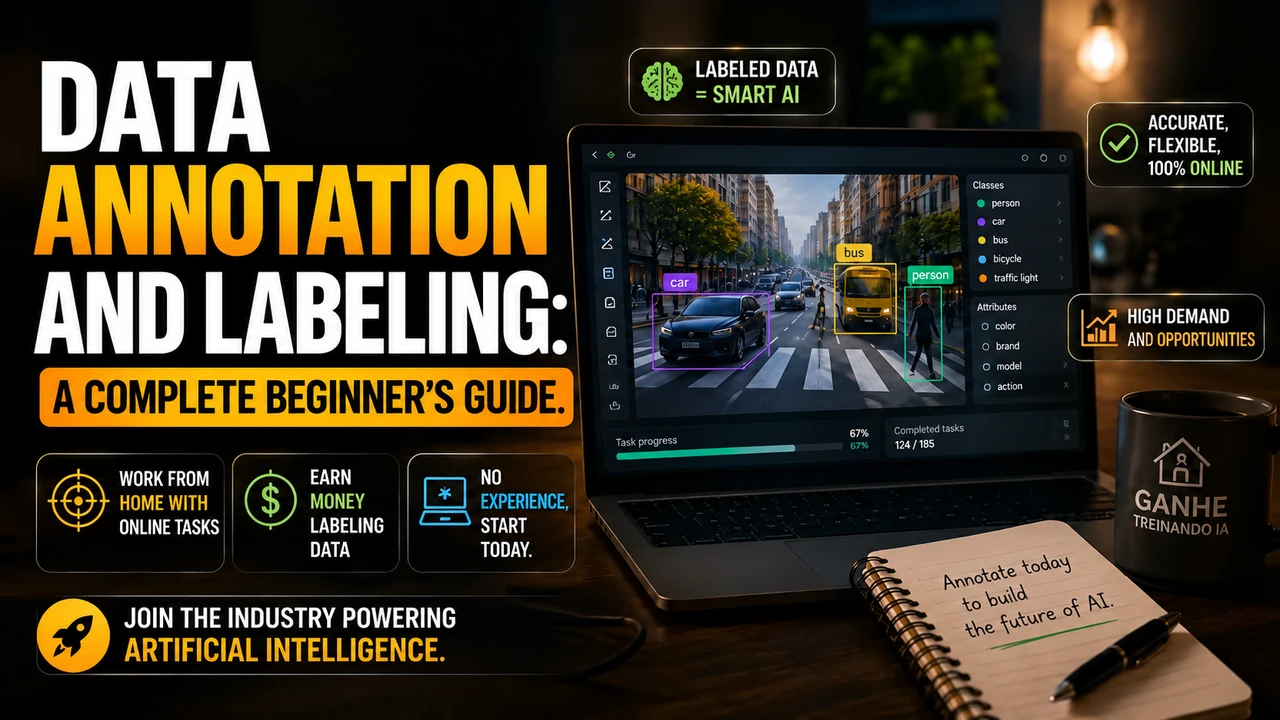
Does this work have to do with data annotation?
They are sister areas. Evaluating responses is a specific type of data annotation, focused on judging quality rather than classifying or labeling.
Do programmers have an advantage in this market?
Yes, in specific code evaluation projects, which tend to pay above the general average as they require technical knowledge of software development.